Industry 4.0
Industry 4.0
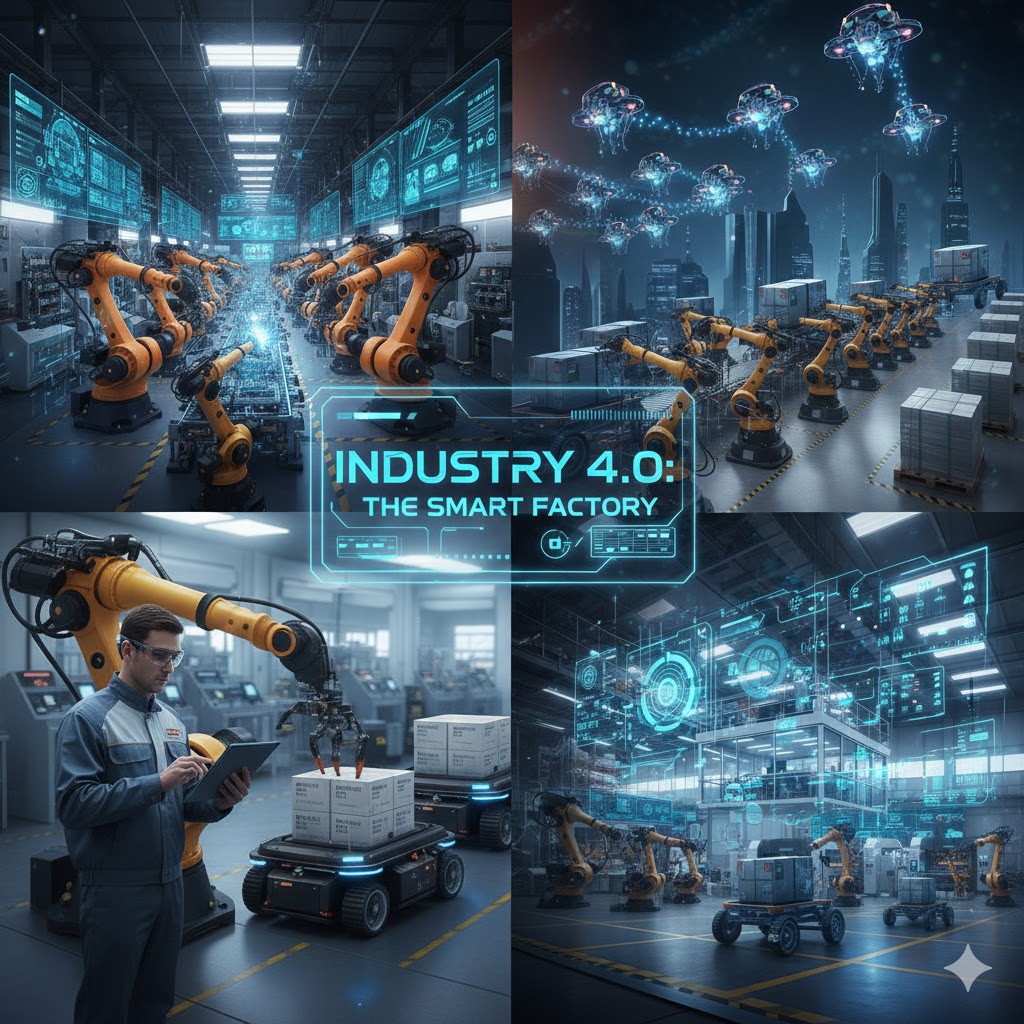
Industry 4.0, often referred to as the Fourth Industrial Revolution, signifies the integration of advanced digital technologies with traditional manufacturing and industrial processes. This transformation reshapes how products are designed, produced, and delivered by creating highly connected and intelligent production environments.
At its core, Industry 4.0 leverages technologies such as the Internet of Things (IoT), artificial intelligence (AI), big data analytics, cloud computing, and advanced automation. These technologies enable machines, systems, and devices to communicate seamlessly, facilitating real-time data collection, analysis, and decision-making.
By connecting physical operations with digital intelligence, Industry 4.0 enhances efficiency, flexibility, and productivity while enabling smarter, more adaptive manufacturing ecosystems.
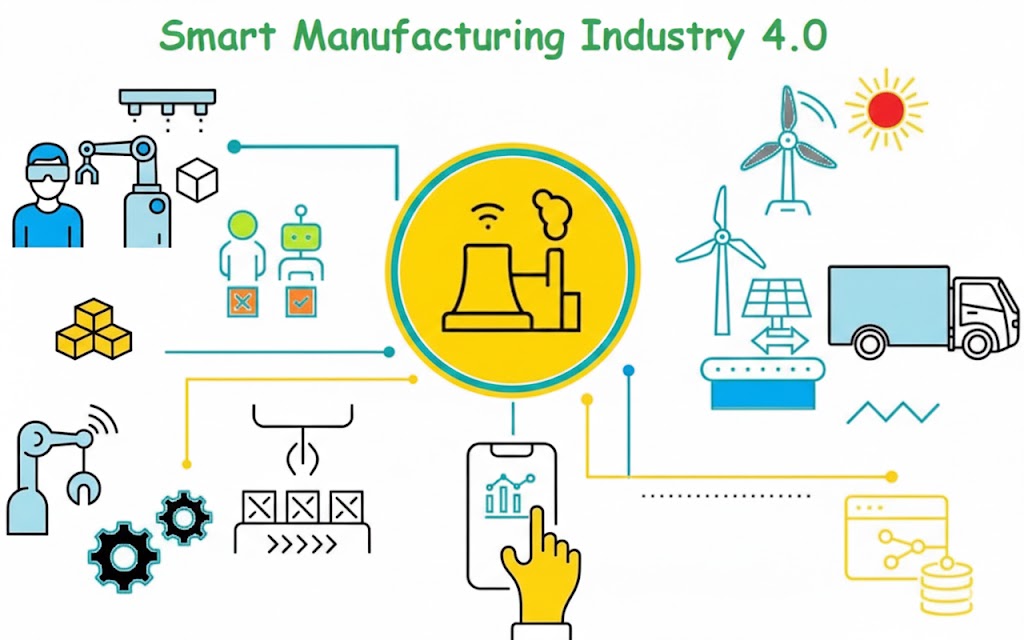
This level of connectivity enables real-time monitoring, analysis, and control of manufacturing processes, resulting in improved efficiency, greater flexibility, and faster responsiveness to market demands. Smart manufacturing also supports predictive maintenance by using data insights to anticipate equipment issues, thereby reducing downtime and improving overall equipment effectiveness (OEE).
Furthermore, it enables greater product customization through adaptable and agile production systems. By harnessing data, automation, and connectivity, smart manufacturing modernizes traditional operations and establishes a foundation for more efficient, resilient, and sustainable industrial practices in the Industry 4.0 landscape.
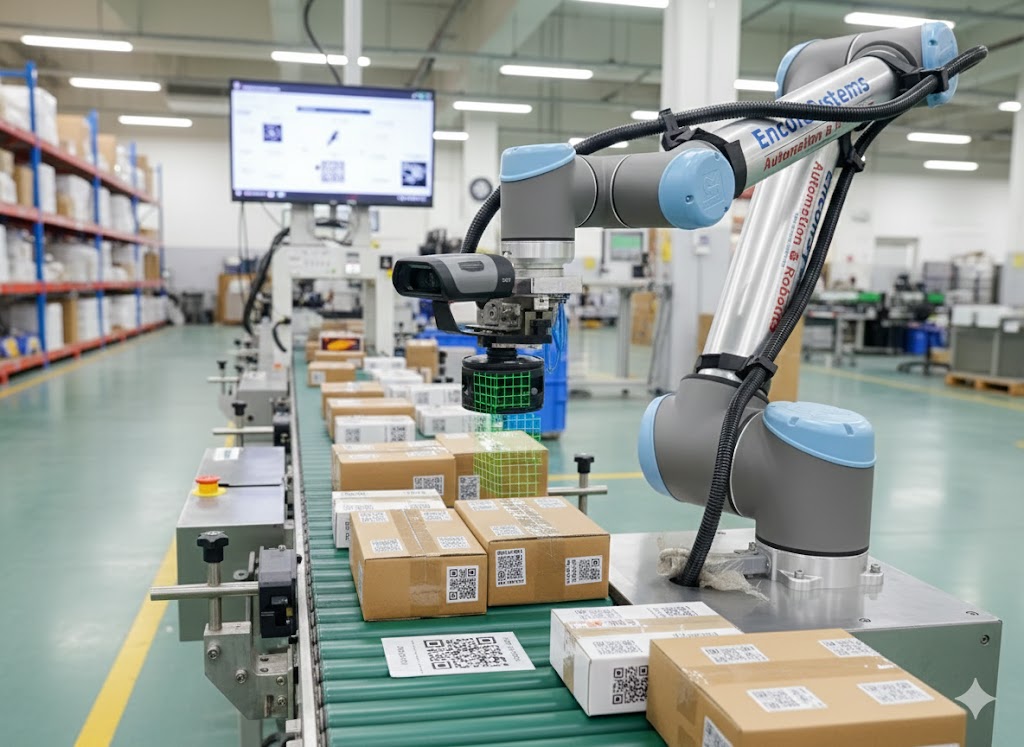
Within the framework of Industry 4.0, vision and barcode technologies are essential for improving automation, operational efficiency, and data accuracy across manufacturing and logistics environments.
Computer vision, a branch of artificial intelligence, enables machines to interpret and act on visual information. In manufacturing, vision systems are widely used for quality inspection, defect detection, and process monitoring. By combining high-resolution cameras with advanced image-processing algorithms, these systems can identify inconsistencies, verify product specifications, and ensure compliance with quality standards in real time.
Barcodes, meanwhile, serve as a fundamental tool for data capture and traceability. They provide a standardized way to encode product information—such as part numbers, batch details, or serial numbers—which can be quickly read by scanning devices. Barcode systems support accurate inventory management, minimize identification errors, and enhance end-to-end visibility throughout the supply chain, from raw materials to finished goods.
When integrated, vision and barcode technologies create a more intelligent and connected manufacturing ecosystem. Together, they enable real-time data collection, analysis, and decision-making—driving higher efficiency, improved accuracy, and greater transparency in Industry 4.0 operations.
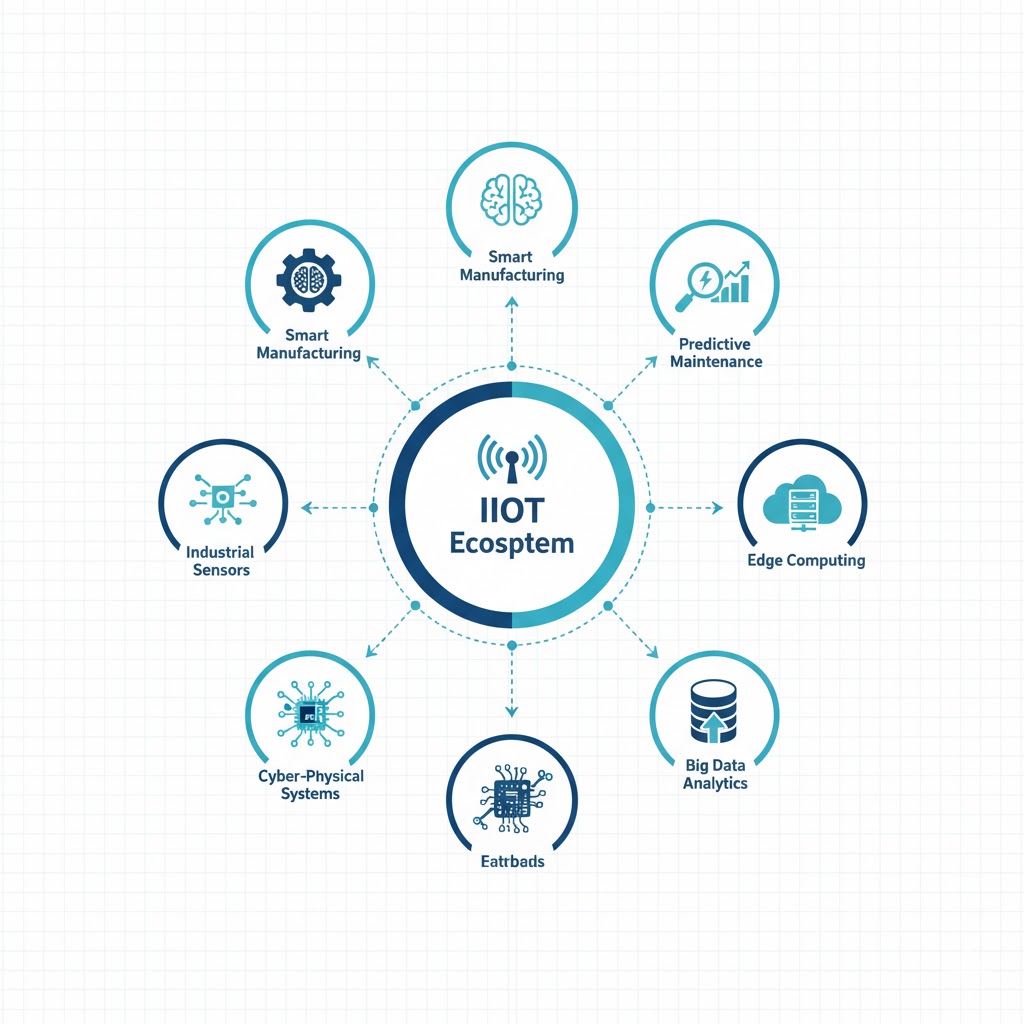
The Industrial Internet of Things (IIoT) is a fundamental driver of Industry 4.0, significantly transforming industrial operations and processes. IIoT involves connecting sensors, machines, and industrial devices to the internet, enabling them to collect, exchange, and analyze data in real time.
Within the Industry 4.0 framework, IIoT supports the development of smart, interconnected industrial ecosystems. It enables the creation of “smart factories,” where equipment and systems communicate autonomously to optimize production workflows. Embedded sensors gather data related to machine performance, operating conditions, energy usage, and environmental factors. This information is transmitted through secure networks for real-time monitoring and advanced analysis.
By leveraging the insights generated from IIoT data, organizations can make informed, data-driven decisions, improve operational efficiency, reduce downtime, and enhance overall productivity. IIoT ultimately enables more intelligent, responsive, and optimized industrial environments.
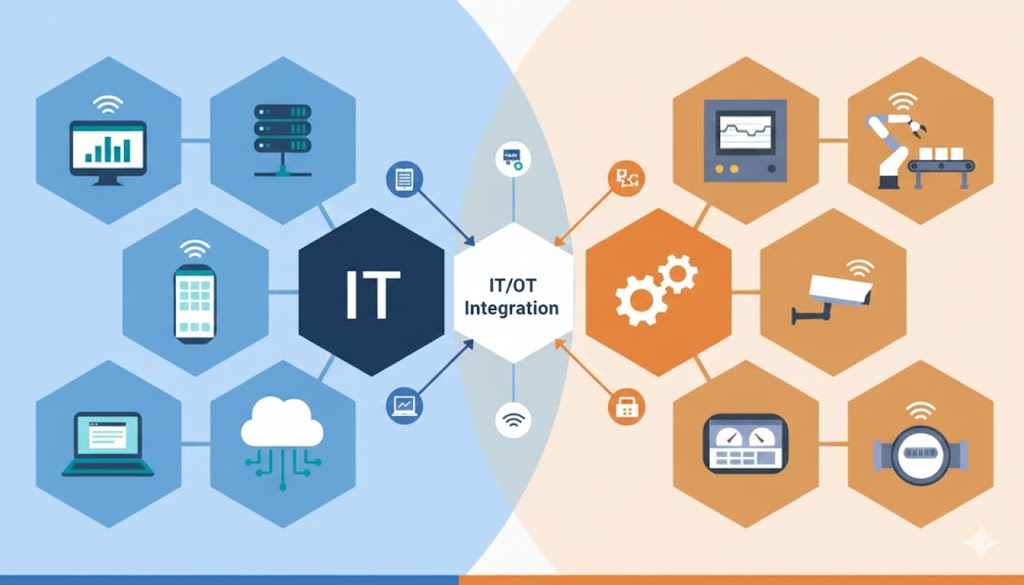
The integration of Information Technology (IT) and Operational Technology (OT) is a cornerstone of Industry 4.0, enabling a unified and more efficient approach to industrial operations. Traditionally, IT focuses on computing systems, software, networking, and data management, while OT is responsible for controlling and monitoring physical equipment, machinery, and production processes on the factory floor.
In the Industry 4.0 environment, these two domains converge to create a connected and intelligent industrial ecosystem. By integrating IT and OT, data generated from machines—such as performance metrics, production rates, and quality parameters—can be collected, analyzed, and transformed into actionable insights through advanced software systems.
A simple analogy is a smart home where appliances, lighting, and climate control systems work together seamlessly. Similarly, in a smart factory, IT systems (the “brain” managing data and analytics) communicate effectively with OT systems (the “hands” operating machinery). This coordination ensures that insights from digital systems directly influence real-time physical operations.
The result of IT-OT integration is improved decision-making, enhanced operational efficiency, reduced downtime, and a more agile and responsive industrial environment—key characteristics of Industry 4.0.