
Factory Automation
Factory Automation
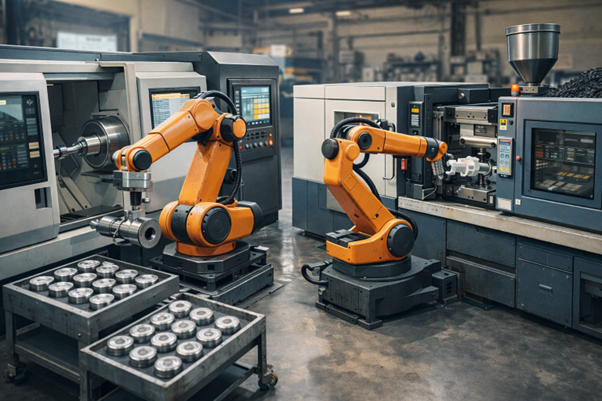
Factory automation involves the use of control systems, machinery, and information technologies to automate processes within a manufacturing facility. Its main goal is to increase efficiency, boost productivity, minimize manual intervention, and optimize overall production performance.
This approach integrates various technologies—such as programmable logic controllers (PLCs), robotics, sensors, and software systems—to create a coordinated and streamlined manufacturing environment. By connecting and automating different stages of production, factory automation ensures consistent quality, improved accuracy, and smoother operational workflows.
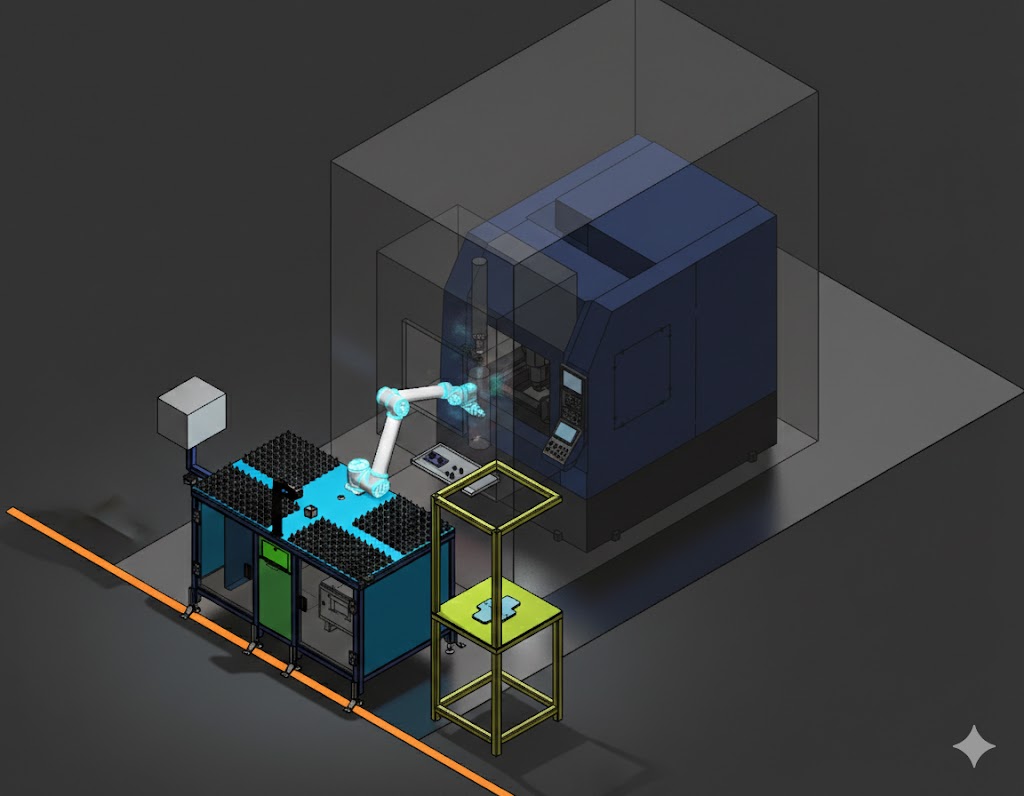
This role may be carried out by human operators or robotic systems. Responsibilities often include tool changes, basic maintenance, and strict adherence to safety procedures to ensure smooth and secure machine operation. In automated setups, machine tending also involves programming robots for specific tasks, synchronizing their movements with production equipment, and troubleshooting any programming or operational issues.
Efficient machine tending is essential for reducing downtime, improving productivity, and maximizing the benefits of automation across industries such as metal fabrication, plastics processing, and CNC machining.
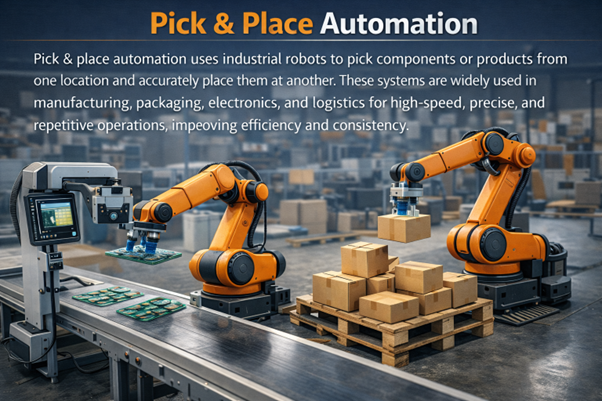
A pick-and-place operation using robots and cobots involves automated systems designed to grasp, lift, and accurately position objects from one location to another. These systems are equipped with specialized end-effectors—such as grippers, suction cups, or magnetic tools—that enable them to handle different types of products with precision.
Traditional industrial robots are typically programmed for specific, repetitive tasks within controlled environments. They follow predefined motion paths and use sensors to ensure accurate placement. These robots are ideal for high-speed, high-precision applications, such as manufacturing and assembly lines, where consistency and efficiency are critical.
In contrast, collaborative robots (cobots) are designed to operate safely alongside human workers. They feature advanced safety mechanisms and can be programmed or reconfigured easily, even by non-experts. Cobots are particularly well-suited for applications that require flexibility, frequent task changes, or close human-robot interaction. They are commonly used in smaller production runs, diverse work environments, or industries where adaptability is essential.
Both industrial robots and cobots are widely implemented across manufacturing, logistics, and warehousing sectors to automate pick-and-place tasks. These systems help improve efficiency, reduce manual labor, and enhance overall productivity. The choice between traditional robots and cobots depends on factors such as task complexity, production volume, workspace limitations, and the desired level of human collaboration.
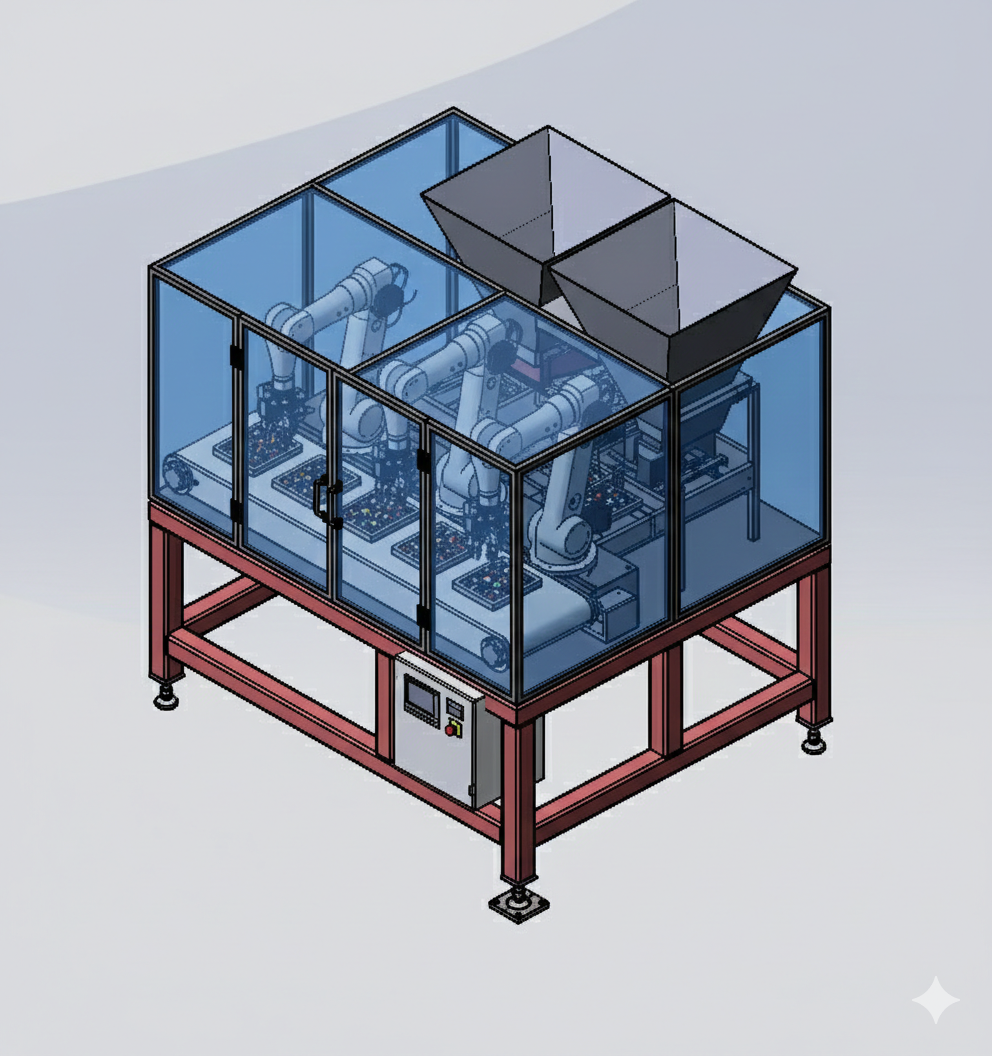
Low-cost automation refers to the strategic adoption of automated solutions with a strong focus on minimizing initial investment, making automation more accessible—especially for small and medium-sized enterprises (SMEs). Its primary goal is to improve operational efficiency, increase productivity, and reduce dependence on manual labor without requiring significant upfront capital.
This approach typically involves the use of simple, cost-effective technologies such as basic sensors, actuators, and controllers designed to perform specific automation tasks. A key feature of low-cost automation is modularity, allowing businesses to begin with small-scale implementations and expand gradually as operational needs grow and budgets permit.
These systems are often designed for easy integration into existing manual processes, reducing disruption during deployment. Collaborative robots (cobots) are commonly used in low-cost automation due to their flexibility and ability to operate safely alongside human workers without extensive safety infrastructure. Additionally, the use of open-source software and standardized components further enhances affordability and accessibility, enabling a wider range of industries to benefit from automation.
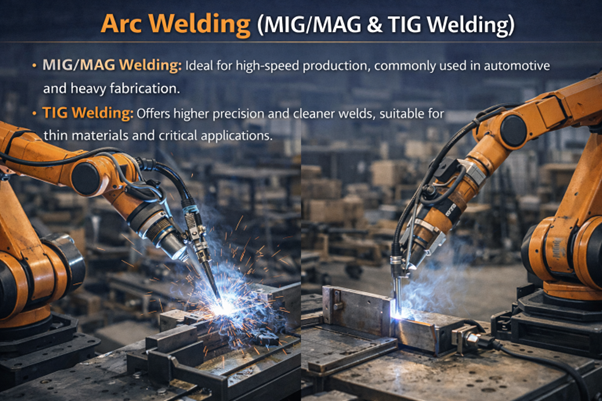
Robotic welding is a key application of industrial automation, enabling high precision, consistency, and productivity in manufacturing processes. Depending on the material, application, and industry requirements, different types of robotic welding technologies are used:
Arc Welding (MIG/MAG & TIG Welding)
Arc welding is the most widely used robotic welding method. It uses an electric arc to melt and join metals.
- MIG/MAG Welding: Ideal for high-speed production, commonly used in automotive and heavy fabrication.
- TIG Welding: Offers higher precision and cleaner welds, suitable for thin materials and critical applications.
👉 Best for: Automotive parts, fabrication, pipelines
Spot Welding
Spot welding joins metal sheets by applying pressure and electrical current at specific points.
- Extremely fast and repeatable
- Widely used in mass production
👉 Best for: Car body assembly, sheet metal work
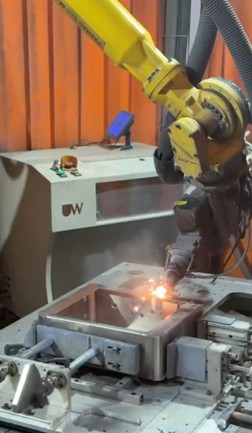
Laser Welding
Laser welding uses a focused laser beam to create precise, high-quality welds.
- Minimal heat distortion.
- High accuracy and speed
👉 Best for: Electronics, medical devices, battery manufacturing
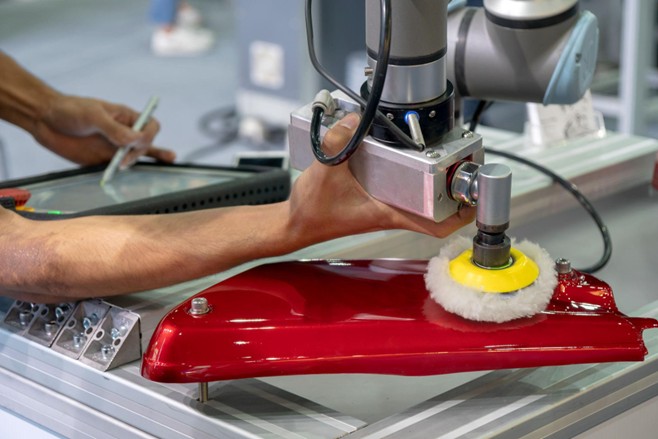
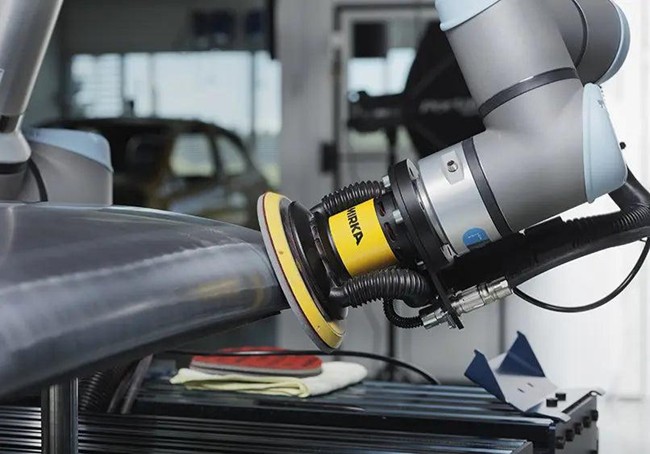
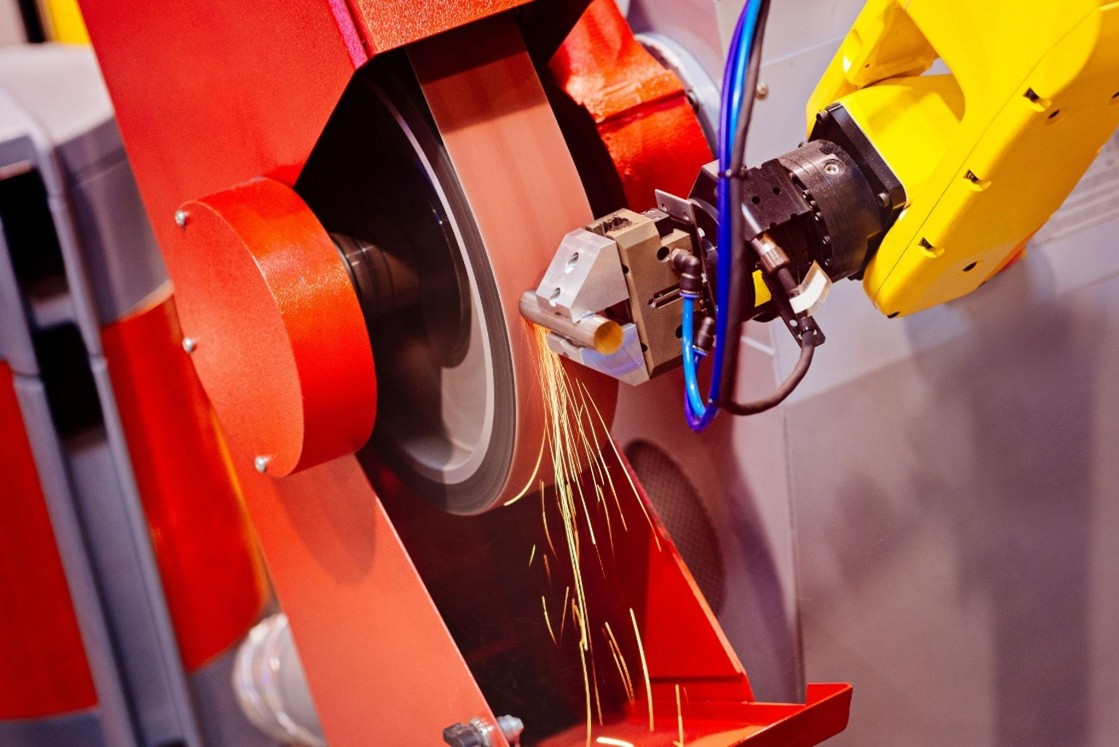
Robotic Polishing & Grinding Applications
Robotic polishing and grinding involve the use of industrial robots to perform surface finishing operations with high precision, consistency, and repeatability. These processes are essential for improving surface quality, dimensional accuracy, and product aesthetics across a wide range of industries.
Process Overview
In these applications, robots are equipped with specialized tools such as abrasive wheels, sanding discs, polishing pads, and belt grinders. Advanced force control systems and sensors allow the robot to maintain consistent pressure and contact, ensuring uniform finishing even on complex shapes and contours.
Key Applications
- Deburring: Removing sharp edges and excess material after machining or casting
- Surface Finishing: Achieving smooth, uniform surfaces
- Polishing: Enhancing shine and aesthetic appeal
- Grinding: Material removal for shaping or precision finishing
Industries Served
- Automotive (components, alloy wheels, body parts)
- Aerospace (precision parts, turbine components)
- Metal fabrication and foundries
- Consumer goods (appliances, hardware fittings)
Advantages of Robotic Polishing & Grinding
- Consistent Quality: Eliminates variability associated with manual operations
- Improved Productivity: Continuous operation with reduced cycle time
- Worker Safety: Minimizes exposure to dust, vibration, and hazardous conditions
- Cost Efficiency: Reduces labor dependency and rework
- Flexibility: Easily programmable for different parts and finishing requirements
Technology Integration
Robotic systems can be integrated with:
- Force control and compliance tools for precise pressure management
- Vision systems for part detection and alignment
- CNC and PLC systems for synchronized operations
- Dust collection and safety enclosures for a clean working environment