End of Line Automation
End of Line Automation
End-of-Line Automation refers to the final phase of a manufacturing or production process where automated systems handle tasks such as packaging, inspection, and sorting of completed products. Its primary purpose is to improve efficiency in the last stage of production by ensuring items are properly packed, quality-checked, and ready for distribution.
This stage often includes robotic palletizing systems, automated packaging equipment, quality inspection technologies, labeling machines, and conveyor systems for moving finished goods. By automating these processes, manufacturers can minimize manual labor, increase precision, enhance product consistency, and optimize overall productivity before shipment.
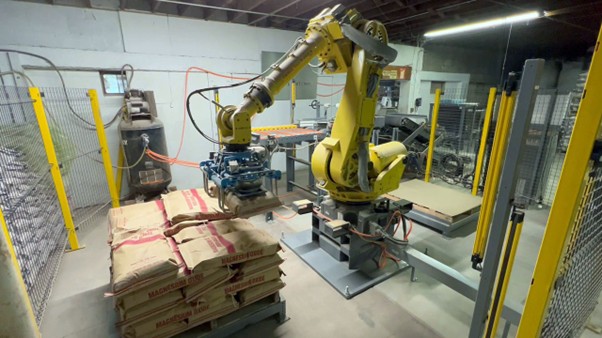
In industrial and warehouse environments, palletizing is frequently automated through robotic systems or dedicated machinery. These automated systems are designed to pick products from conveyors or other input sources and place them onto pallets following a predefined stacking pattern. The arrangement is typically optimized based on factors such as product dimensions, weight, and the required stability of the final pallet load.
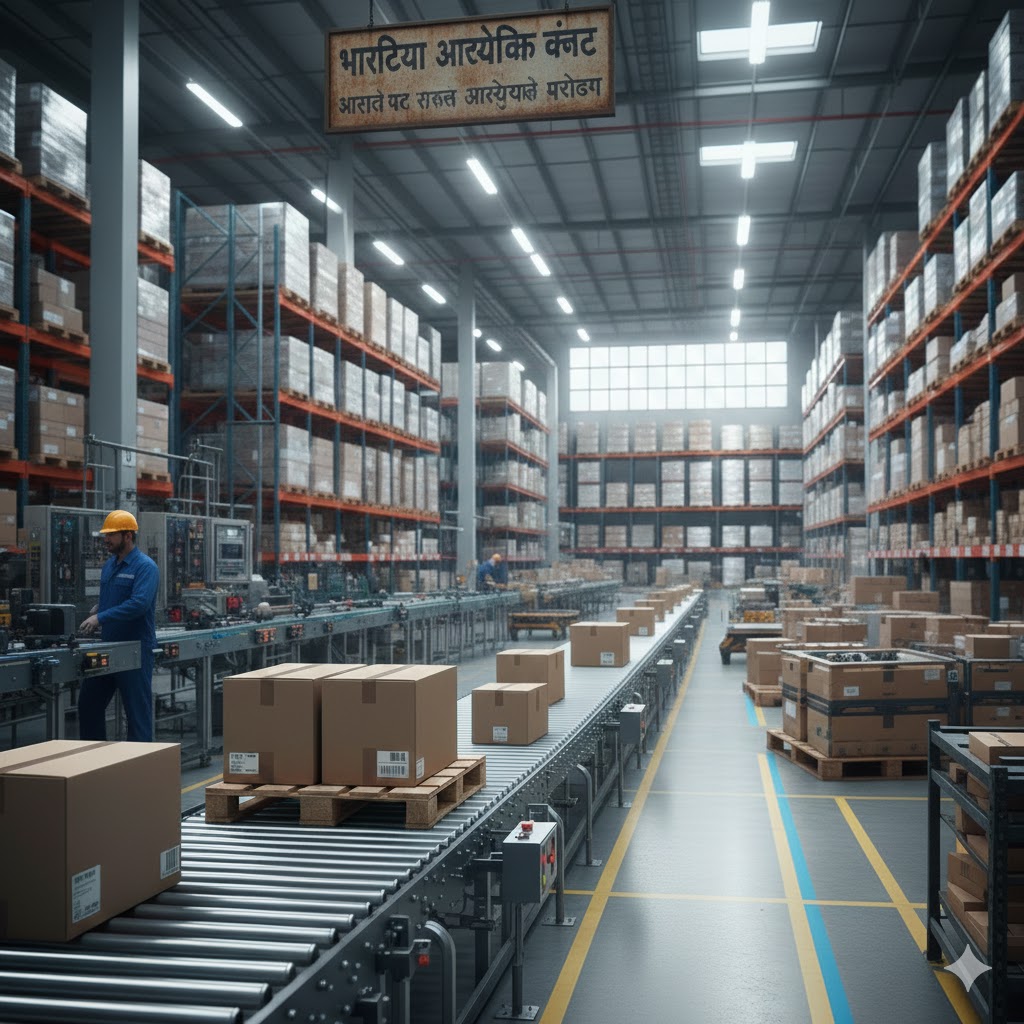
A conveyor is a mechanical system designed to move goods, materials, or objects from one point to another along a fixed path. It typically uses a continuous belt, chain, roller, or similar moving mechanism to carry items smoothly and efficiently through a defined route.
Conveyors are widely used in industries such as manufacturing, mining, agriculture, and logistics to automate and simplify material handling operations. They can be customized in various shapes, sizes, and configurations to suit specific application requirements. By enabling continuous and controlled movement of materials, conveyor systems significantly improve productivity, reduce manual effort, and enhance overall operational efficiency.

Sorting operations are essential for improving efficiency and maintaining smooth workflow across various industrial environments. In sectors such as manufacturing, logistics, and supply chain management, sorting helps organize inventory by categorizing products according to criteria like SKU, product type, or expiration date. This structured approach enables faster retrieval, accurate inventory tracking, and better overall organization within warehouses.
Sorting also plays a critical role in quality control, where products are inspected and classified based on quality standards for actions such as rework, approval, or rejection. By ensuring proper categorization and handling, sorting processes reduce errors and enhance operational performance.
To further improve speed and accuracy, many industries integrate advanced technologies such as conveyor systems and robotic sorting solutions. These automated systems reflect the ongoing advancement of industrial practices, driving higher productivity and greater precision in material handling operations.
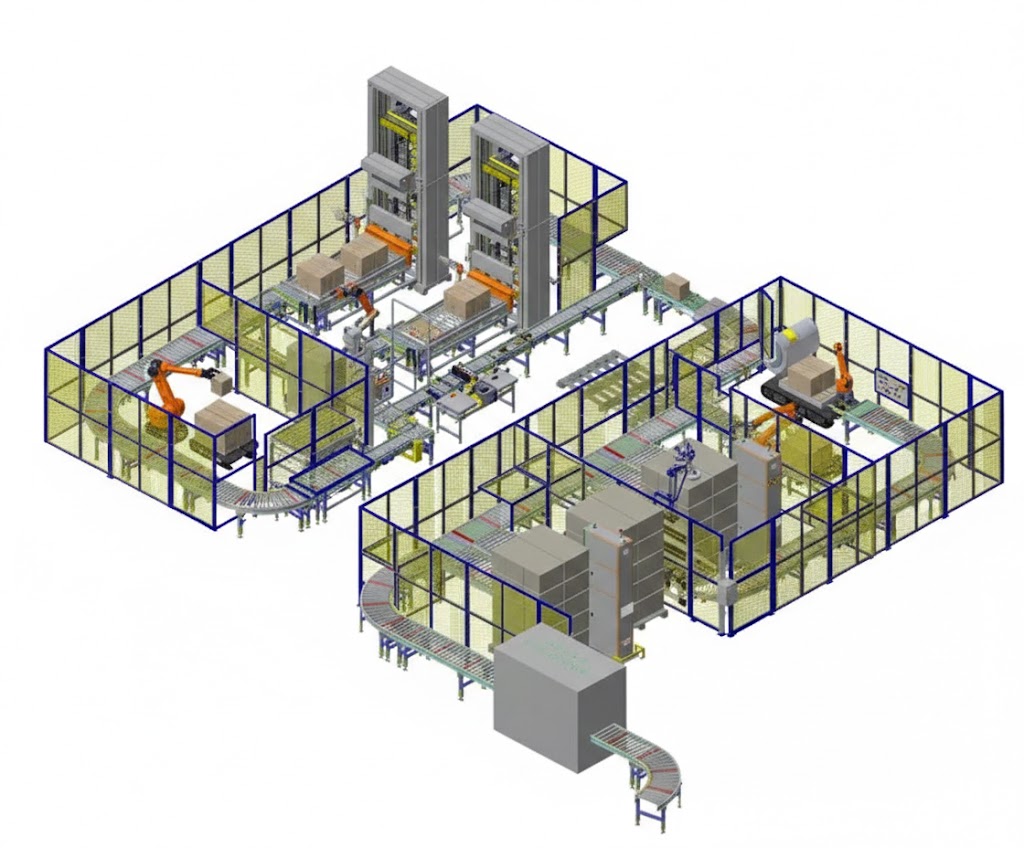
A transfer system in industrial settings is a mechanism or integrated solution used to move goods, materials, or products from one point to another within a production facility or across different stages of the manufacturing process. These systems play a critical role in improving workflow efficiency, minimizing manual intervention, and ensuring smooth production operations.
Different types of transfer systems are utilized across industries, each designed to meet specific operational needs and application requirements.
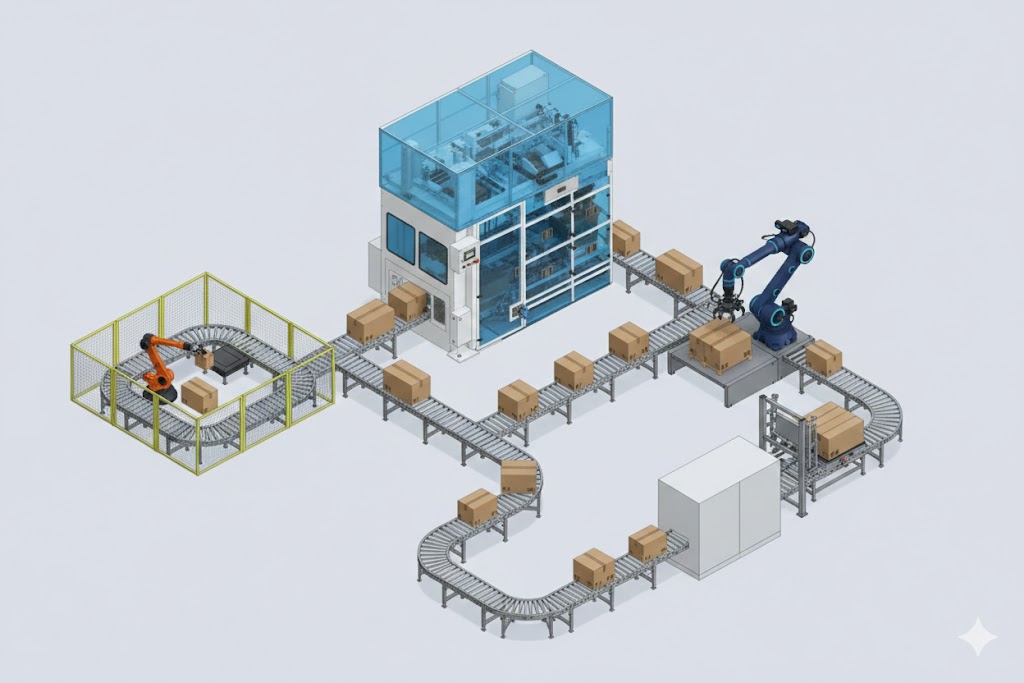
Auto case filling in industrial environments refers to the automated process of placing products into containers or cases during manufacturing, packaging, or logistics operations. This system is designed to enhance efficiency, improve accuracy, and significantly reduce manual labor.
The process typically starts with automated sorting, where products are categorized based on factors such as size, weight, or type to ensure correct placement into designated cases. Sensors and precision measurement systems verify the exact quantity required per case, maintaining consistency and minimizing errors. Robotic pick-and-place units increase speed and accuracy, while conveyor systems enable a continuous and seamless flow of products from sorting stations to case filling units.
Automated sealing and labeling systems further ensure product safety, traceability, and efficient inventory management. These operations are commonly integrated with advanced control systems, including programmable logic controllers (PLCs), to synchronize processes and maintain smooth functionality. Built-in quality control mechanisms detect inconsistencies in real time, allowing immediate corrections. Additionally, data logging and reporting capabilities help operators track performance metrics and optimize operations.
This comprehensive approach to auto case filling improves productivity, reliability, and operational efficiency across industries such as manufacturing, food processing, pharmaceuticals, and logistics.